

What Happens Here Goes Everywhere
How to protect, track, license, and verify digital images.
In today’s digital media environment, images can travel almost instantly. They can be downloaded, reposted, screenshotted, stripped of attribution, separated from their original licensing terms, or used in ways their creators and rights holders never intended.
Metadata can help by carrying information about an image’s creator, copyright, licensing terms, and contact information. But metadata alone is not always enough. It can be removed as an image moves between platforms or applications, leaving the file disconnected from the information that explains who owns it and how it may be used.
"We came up with the idea from a very basic problem: how do you keep contracts, rights, and ownership information connected to digital media as the media travels?"
Tiffany Walling McGarity, Co-founder & CEO, Metapyxl
Metapyxl developed technology that gives a digital image a persistent identity through an invisible embedded marker, combined with metadata, C2PA Content Credentials, provenance, licensing, and rights records. The marker cannot be seen with the human eye but can be detected computationally, and is designed to remain identifiable through common changes such as resizing, compression, cropping, and screenshots.
Metapyxl also holds an issued patent related to connecting contracts and rights information to digital media.
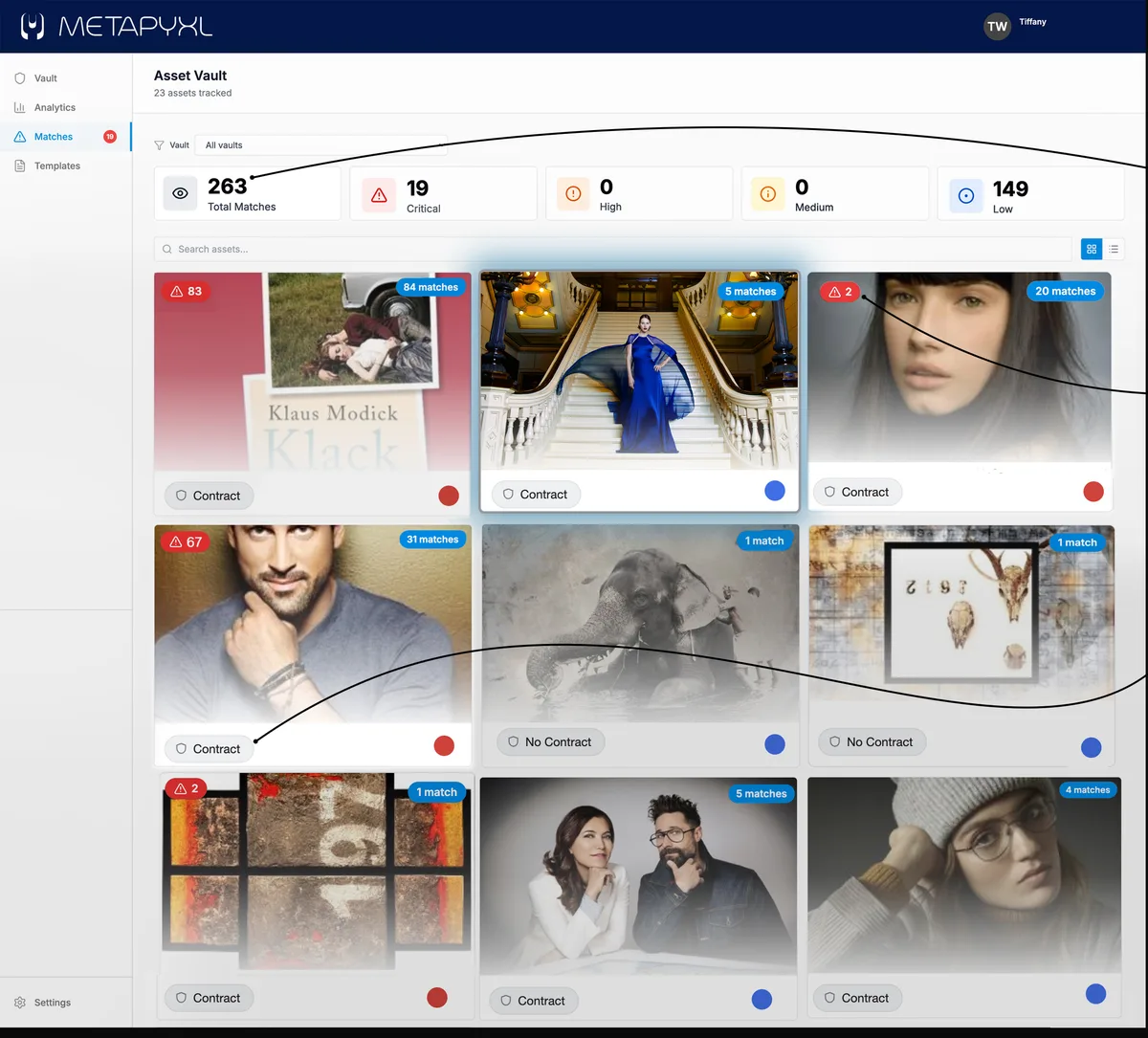
Through the Metapyxl Vault, creators and organizations can associate an image with information including ownership, attribution, licensing terms, usage permissions, contracts, and AI-related permissions. This creates a record that can remain connected to the identity of the asset even when the image itself travels beyond the system where it originated.
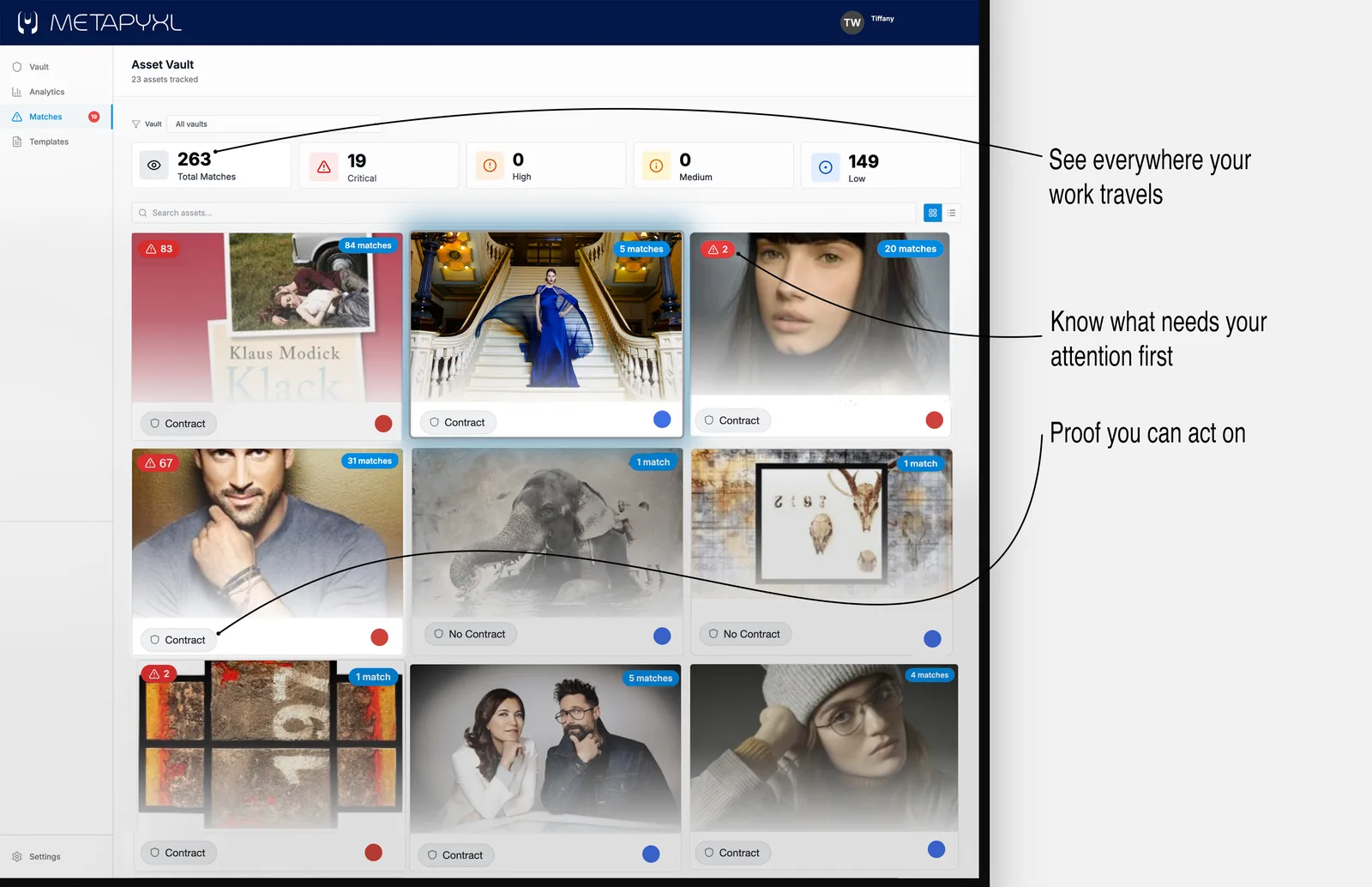
Tracking is another part of the platform. Metapyxl can help users discover where protected images appear online, giving creators and rights holders greater visibility into how their content is circulating. When a questionable use is discovered, the associated ownership, licensing, and provenance information can also help establish an evidence trail for whatever action the rights holder chooses to take.
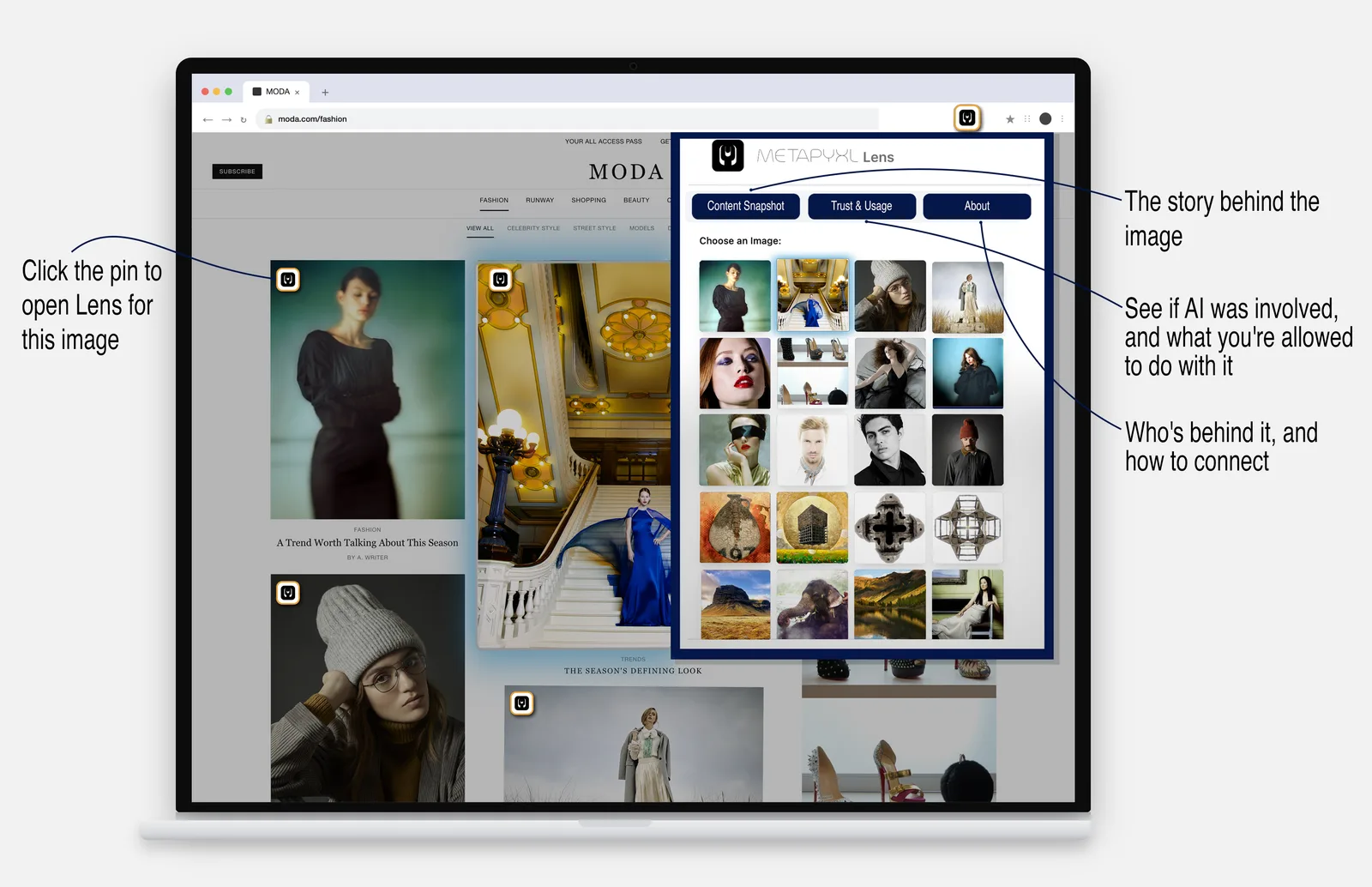
Metapyxl’s Lens browser technology provides another verification layer. It allows a protected image to be inspected so that information connected with that image, such as creator identity, rights, permissions, and licensing context, can be accessed without relying solely on what happens to be visible on the webpage where the image appears.
“We address both the creator side and the organizations responsible for managing and using content,” adds Jennifer Walling, co-founder and CMO of Metapyxl. “Sometimes misuse is deliberate. But very often, an image becomes separated from its attribution, licensing terms, or usage permissions as it moves from one person, platform, or organization to another. We are creating a way for that information to remain connected to the asset.”
That distinction is increasingly important as digital content moves through publishing platforms, social media, DAM systems, agencies, brands, and AI workflows. Knowing where an image came from is only part of the problem. Organizations also need to know who owns it, what permissions apply, whether it has been licensed, how it may be used, and what to do when those conditions are no longer clear.
Metapyxl’s platform is built for still images today. The underlying approach is designed to work across other media types as well, and the roadmap calls for audio next, followed by video and PDFs, as those capabilities are built into the platform.
Metapyxl offers solutions for individual creators as well as larger organizations managing substantial volumes of digital imagery.
“While we’re not the picture police, we give creators and rights holders information they often haven’t had before,” Jennifer explains. “Once you can identify an image, understand the rights connected to it, and see where it has traveled, you are in a much stronger position to decide what action to take.”
More information about Metapyxl and its solutions for creators and organizations can be found at metapyxl.com.